US Drone Overflight Aids Capture of Sinaloa Drug Lord
Mexican officials confirm that a US surveillance drone helped locate and capture Fausto Isidro Meza Flores, sparking violence in Sinaloa and highlighting complex bilateral security cooperation.
By News Media House Staff ·
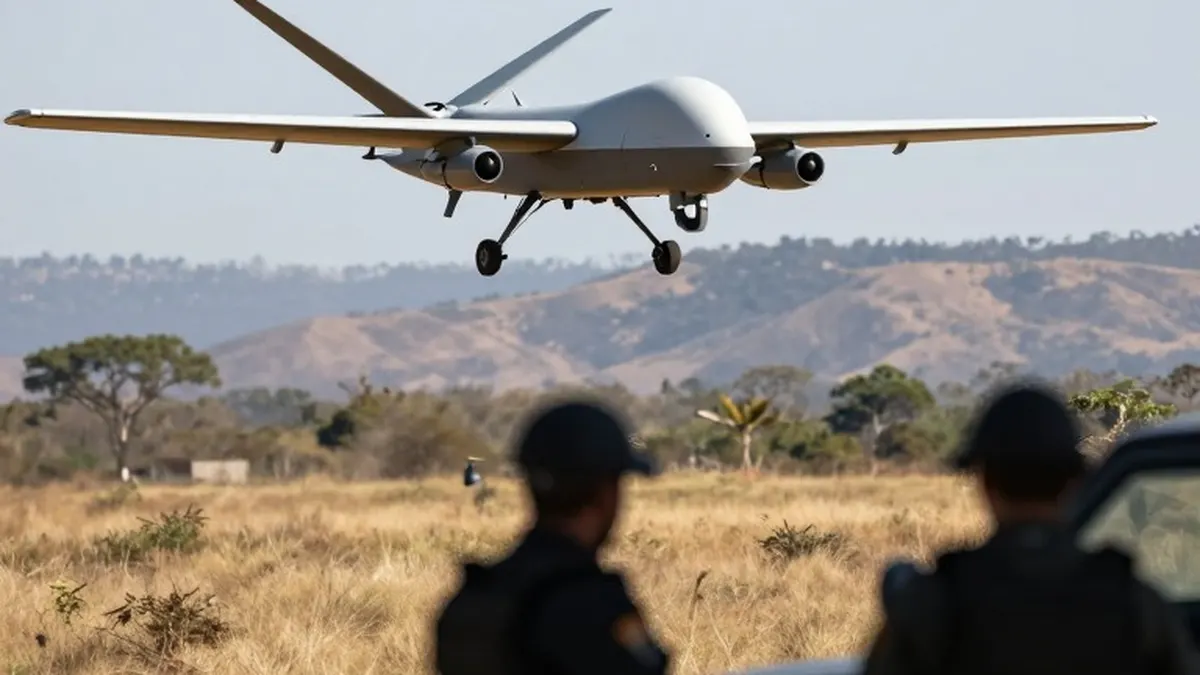
Mexican security officials confirmed on Monday that the United States deployed a surveillance drone over Mexican territory over the weekend to assist in the capture of a high-profile drug trafficker. The operation resulted in the arrest of Fausto Isidro Meza Flores, widely known as El Chapo Isidro, who was considered one of the most wanted fugitives in the country.
The detention marks a significant moment in the ongoing law enforcement partnership between the two neighboring nations. While cooperation has been increasing, the direct involvement of the United States in Mexican security operations remains a sensitive political issue. President Donald Trump has frequently pressured his counterpart, President Claudia Sheinbaum, to intensify efforts against cartels, while the Mexican government has consistently emphasized its national sovereignty.
Addressing the public on Monday, President Sheinbaum clarified that U.S. forces were not operating on the ground in Mexico. Instead, the collaboration was limited to the sharing of intelligence. She stated that the incident demonstrated the capacity of the Mexican armed forces to execute major detentions, reinforcing the message that the primary operational role remained with domestic agencies.
The capture triggered a surge of violence in the northern state of Sinaloa, specifically in the city of Guasave. Mexican officials reported that twenty people were killed in the aftermath of the arrest. Among the deceased were four soldiers and sixteen individuals identified as suspected criminals. The sudden outbreak of conflict underscored the high stakes involved in removing key figures from the region's criminal landscape.
Defense Secretary General Ricardo Trevilla Trejo provided further details on Monday, explaining that the successful operation was the result of significant intelligence sharing with U.S. authorities over the preceding three months. This collaboration allowed investigators to pinpoint the exact location of Meza Flores in Guasave. In the week leading up to the arrest, the U.S. was authorized to fly intelligence drones over Mexican airspace to help Mexican law enforcement surround and capture the leader.
Mexican officials stressed that the intelligence mission was conducted in full compliance with domestic law. Additionally, authorities noted that the United States already had an existing extradition request for Meza Flores on drug trafficking charges. This development leaves open the possibility that the cartel boss may be transferred to the U.S. to face trial, although no immediate decision has been announced.
Both Mexican and U.S. law enforcement agencies celebrated the arrest as a major blow to organized crime in the region. The U.S. government highlighted its role in providing intelligence support but did not offer extensive details regarding the specific use of the surveillance drone when queried by reporters on Monday.
Meza Flores led the Beltran Leyva organization before establishing his own group, the Meza Flores Transnational Criminal Organization. He also served as a key ally to a faction of the Sinaloa Cartel known as Los Mayos, which is currently engaged in a brutal territorial war against a rival faction within the state.
This arrest is the latest in a series of targeted operations against cartel leaders by Mexican authorities. The most prominent recent example was the killing of Nemesio Oseguera Cervantes, known as El Mencho, leader of the Jalisco New Generation Cartel, in February. While these successes show the government is intensifying its fight against crime, experts warn that the strategy could have unintended consequences.
Historical precedents in Mexico and other parts of Latin America suggest that removing cartel leaders without dismantling their broader criminal structures often leads to bloody power struggles between rival factions. This dynamic has been particularly evident in Sinaloa in recent years, raising questions about the long-term stability of the current enforcement approach.
Originally published by News Media House