Northern Israel Council Leader Criticizes Proposed Budget Cuts for Border Communities
Moshe Davidovich warns that NIS 300 million in cuts to rehabilitation funds threatens the resilience of residents who remain on the front lines of the war.
By News Media House Staff ·
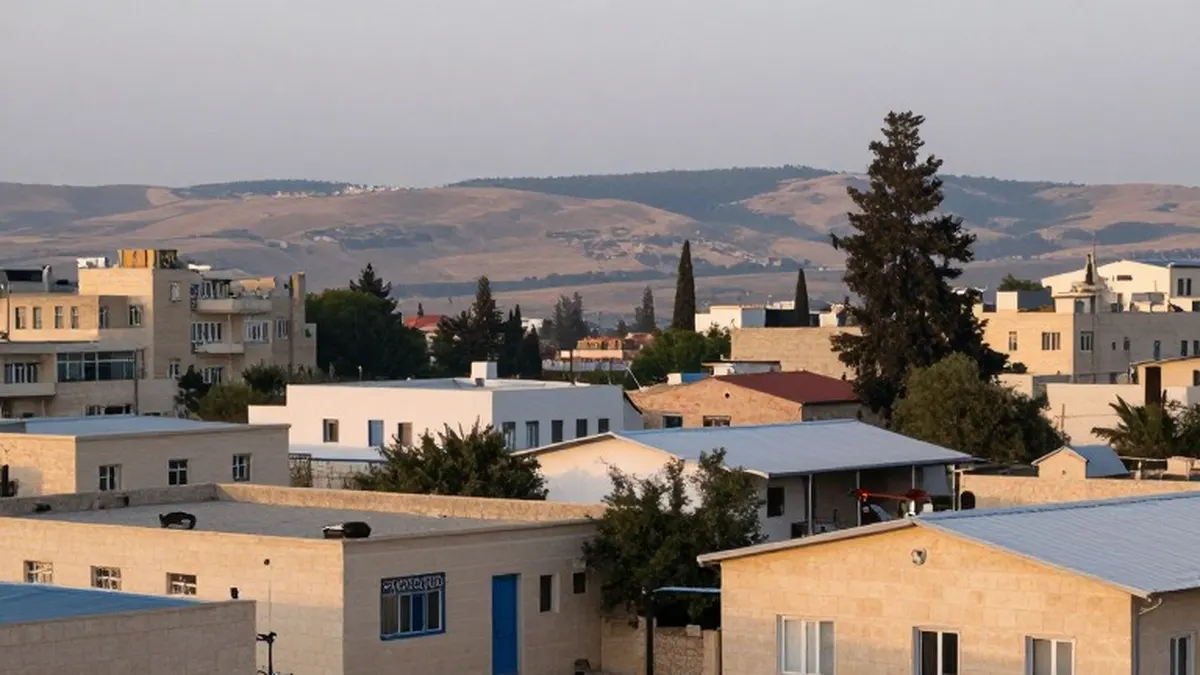
Moshe Davidovich, the chairman of the Confrontation Line Forum and head of the Mateh Asher Regional Council, has voiced strong opposition to the Israeli government's plan to reduce rehabilitation budgets for northern Israel and communities along the Gaza border. In an interview with 103FM on Tuesday, Davidovich revealed that the administration intends to slash NIS 300 million from these funds, a decision that contradicts earlier assurances given to local leaders.
The council head stated that he received advance notice from government officials regarding the intended reductions. He identified the Tnufa and Tekuma directorates as the primary targets of these financial adjustments. Davidovich emphasized that the cuts would affect residents who serve as the defensive shield for the state while simultaneously enduring the ongoing conflict.
Davidovich pointed to recent events as evidence of the continued danger in the region. He noted that two air raid sirens had sounded in the northern area that week, with alerts issued in Shtula and the Rosh Hanikra region. He described the situation as a war still in progress, contrasting the active security environment with the Finance Ministry's routine approach to budgeting.
While acknowledging the necessity of increasing defense spending, Davidovich argued that border residents are an integral part of the country's security apparatus. He questioned why those living along the fences, whose daily lives are disrupted by artillery and air operations, should face such significant financial setbacks. He recalled that the Prime Minister had previously stated that the confrontation line would be excluded from budget cuts, a promise he felt was now being broken.
The proposed reductions are expected to impact community resilience, welfare, and education. Davidovich highlighted the specific challenges facing children who were displaced during the war. He noted that the region is now more than three years behind central Israel in terms of educational recovery for these students. Many of these children were scattered across the country, staying in hotels and hostels, and their budgets are now at risk of being reduced.
Davidovich described the government's approach as inconsistent, noting that it gives with one hand while taking away with the other. He stressed that the families living along the border are the backbone of the state's resilience. He argued that these families simply wish to return to normalcy, a goal that is complicated by the current financial constraints while military operations continue in Lebanon.
The regional council head expressed hope that the Finance Minister would intervene to protect these funds. He suggested that the director-general of the relevant directorates should receive a clear message that the budget is sacred. Davidovich stated that if the government fails to care for its brave residents, it loses the right to govern. He made this appeal sincerely, not out of frustration, but from a deep concern for the community.
Beyond the financial issues, Davidovich addressed the demographic shift occurring in northern Israel. Many families, particularly in the eastern Galilee, have made the difficult decision to leave permanently. Areas such as Kiryat Shmona and Metula are affected most severely. Even in the Western Galilee, dozens of families in communities like Kibbutz Adamit, Hanita, and Rosh Hanikra have chosen not to return. This exodus is driven primarily by concerns for the well-being of their children rather than a lack of love for the region.
In his conclusion, Davidovich appealed directly to decision-makers to recognize the strategic importance of the border communities. He urged them to value life and the need to strengthen Israel's borders. He referenced the historical principle that the line of the plow constitutes the border, arguing that maintaining this strategic depth is essential for the state's long-term security.
Originally published by News Media House