Oxfam Report Describes Gaza as a Toxic Wasteland After Years of Conflict
A joint report from Oxfam and CEOBS reveals that over 99% of Gaza shows signs of severe environmental contamination, posing long-term health risks to its population.
By News Media House Staff ·
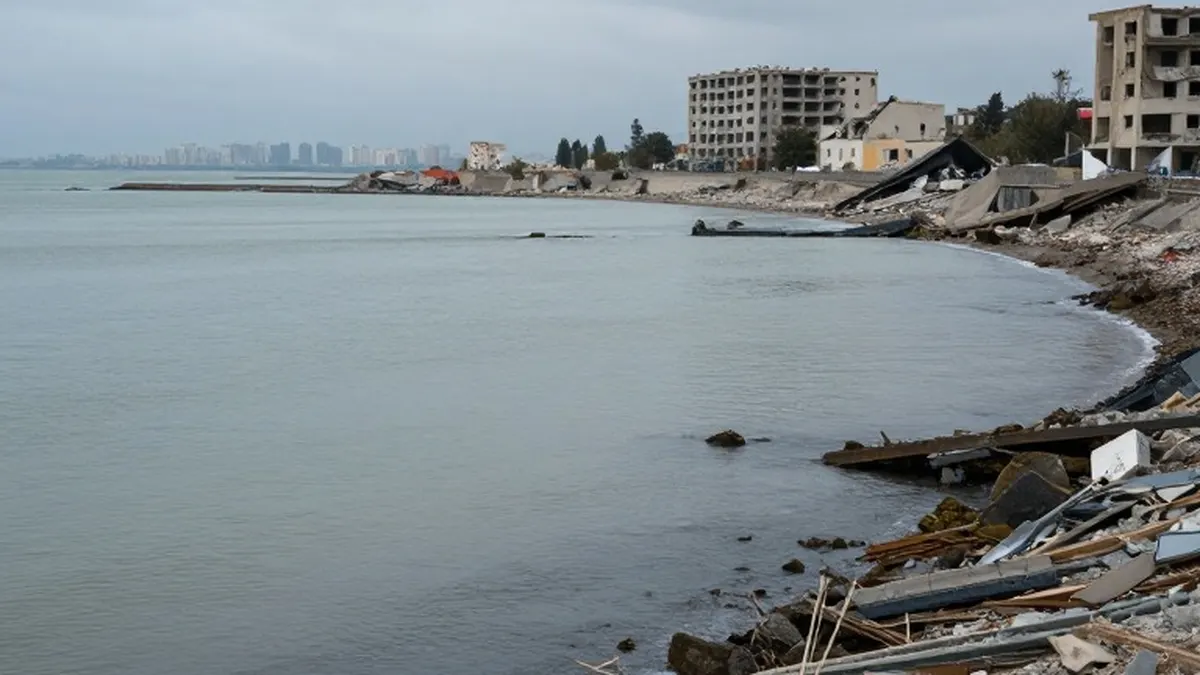
A new report from the non-profit organization Oxfam states that Gaza has effectively become a toxic wasteland due to the environmental damage caused by Israeli military operations. The organization claims that more than 99 percent of the Palestinian territory now shows clear indicators of environmental contamination.
The report identifies several major threats to the population, including heavy metals, explosive residues, and asbestos originating from destroyed buildings. It also highlights the presence of dioxins and biological contaminants in the air, soil, and water supply. These elements are described as immediate dangers to Palestinians and potential risks that could persist for decades.
Amitabh Behar, the executive director of Oxfam International, accused Israel of committing environmental war crimes as part of an ongoing genocide in Gaza. He argued that the destruction and contamination have fundamentally degraded the environmental conditions necessary for human safety and survival. The Israeli government has been asked for its response to these findings.
Israel has previously rejected accusations of genocide in a case at the International Court of Justice, describing them as baseless. The government maintains that its military campaign is an act of self-defense against Hamas following the group's attack on October 7, 2023. Israel also states that it takes steps to mitigate civilian harm during its operations.
Oxfam and the UK-based Conflict and Environment Observatory produced this report using satellite imagery, remote sensing, and other open-source data. It is described as the most comprehensive assessment to date of the environmental impacts from three years of intense war. The findings detail how munitions and the debris from destroyed infrastructure are severely affecting the local environment.
The scale of destruction is significant, with a UN special rapporteur noting in February that over 200,000 tonnes of explosives were dropped on Gaza in nearly two years. This volume is equivalent to the total energy of approximately 13 Hiroshima-type nuclear bombs. Additionally, the UN Environment Programme estimated last year that more than 61 million tonnes of debris had been generated, with about 15 percent posing a high risk of hazardous contamination.
Lama Abdul Samad, an author of the report, told the BBC that Gazans are likely to face long-term chronic health impacts. These include increased respiratory diseases, cancers, organ damage, and a rise in birth defects and stillbirths. The situation is compounded by the fact that all six wastewater treatment plants in Gaza are out of operation, allowing untreated sewage to flow into groundwater and the Mediterranean Sea.
Recent heavy winter storms have exacerbated health issues by mixing rainwater with wastewater, which then flows through streets and tent sites housing displaced people. Testing for contamination levels is often difficult because Gazan laboratories have been destroyed and Israeli restrictions limit the entry of specialist equipment and scientists. The UN Environment Programme has also noted that security concerns previously prevented its expert staff from traveling to the territory.
Local residents report tangible effects on their daily lives and health. A Palestinian dermatologist, Dr. Alaa Abu Hajar, stated that he has seen a five-fold increase in chronic skin diseases since the war began, linking this to pollution and overcrowded living conditions. He noted that children are the age group most affected by the presence of rodents, rubbish, and sewage in the streets.
The conflict has also disrupted livelihoods for farmers and fishermen. Abu al-Abed Sultan, a fisherman, complained that untreated sewage and rubble dumped into the sea harm the marine environment, making it difficult to catch safe food. According to the Hamas-run health ministry, at least 74,746 Palestinians have been killed since the start of the war, while Israel has linked large-scale reconstruction to the disarmament of Hamas and other armed groups.
Originally published by News Media House