
Iranian singer Parastoo Ahmadi receives 74 lashes for online performance
A prominent Iranian artist and four team members have been flogged following a viral YouTube concert where she appeared without a hijab, a punishment that highlights ongoing tensions over dress codes and public decency laws.
By News Media House Staff ·
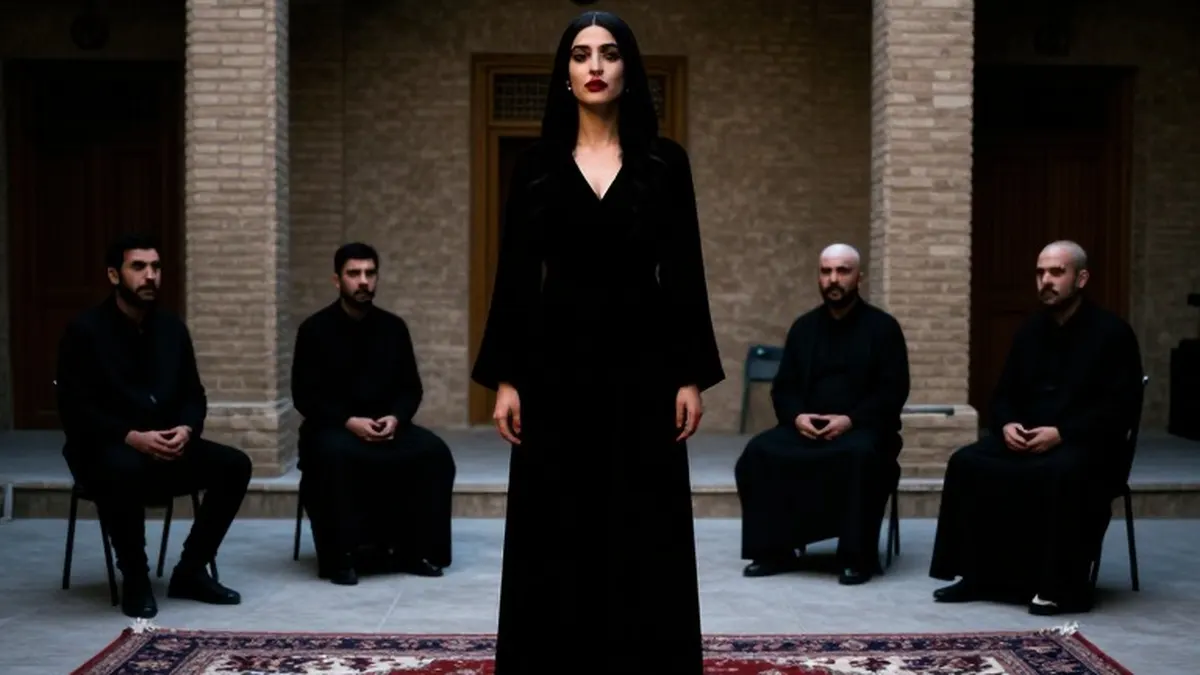
Iranian authorities carried out a sentence of 74 lashes against Parastoo Ahmadi, a well-known 29-year-old singer, and four members of her production team. The punishment was executed on Monday, marking the conclusion of a legal case that drew significant international attention. Local media reports, which cited statements from Ahmadi's legal counsel, confirmed that the flogging had taken place as scheduled.
The case originated from a concert video uploaded to YouTube in December 2024. The performance, which garnered millions of views, featured Ahmadi singing mournful and powerful songs to an empty audience. The stage was set in the grounds of a traditional caravanserai complex and was minimally decorated with a large Persian carpet. The dimly lit setting emphasized the solitary nature of the performance.
In the video, Ahmadi wore a long, strappy gown and deep red lipstick, while all four musicians dressed in black. Her appearance was notable because Iranian women are generally prohibited from singing in public and are required to wear modest clothing and a headscarf. These cultural and legal norms were central to the charges brought against the group.
Ahmadi and her team had previously appeared in court on charges of offending public decency. They were also accused of complicity in the production, transmission, dissemination, and publication of obscene and vulgar content. The sentence of 74 lashes was originally handed down in June to Ahmadi, four musicians, and four crew members. It remains unclear what has happened to the other four individuals who were part of the original sentencing.
Mostafa Nili, Ahmadi's lawyer, confirmed the execution of the sentence in a statement quoted by the ISNA news agency. He noted that the punishment was carried out on Monday. The reformist daily newspaper Shargh also reported on the event, providing further local coverage of the high-profile case.
The case had faced opposition from human rights groups before the final execution of the sentence. In early October, Amnesty International protested the confirmation of the punishment on appeal. The organization urged the Iranian government to abandon its plans to carry out flogging sentences, citing the severity of the penalty for a digital performance.
Flogging has been used in Iran as a penalty for artists who challenge traditional restrictions on women. A similar incident occurred in March 2025, when singer Mehdi Yarrahi was whipped 74 times over a song that called on women to remove their headscarves. These cases illustrate the consistent application of such penalties against figures who test social boundaries.
The backdrop for these legal actions is a broader social shift within the country. Increasing numbers of Iranian women are appearing in public without a hijab. This trend accelerated following the protests that erupted in September 2022 after the death in custody of Mahsa Amini. Amini had been arrested for allegedly violating the country's strict dress code, sparking widespread demonstrations that continue to influence social dynamics.
The execution of Ahmadi's sentence underscores the complex intersection of digital media, cultural tradition, and state enforcement in Iran. While the concert reached a global audience through the internet, the legal repercussions remained deeply local, affecting the artists' physical well-being and public standing.
As the case concludes with the physical punishment of the main figures involved, observers will watch to see if the outcome influences future artistic expressions or public policy regarding dress codes and media content in Iran.
Originally published by News Media House





