Court Unseals Redacted Documents From Raid on Rep. Ilhan Omar's Home
Federal judges released partial records of the October search, detailing a dispute over legislative privileges and the scope of a preindictment investigation into the Minnesota Democrat.
By News Media House Staff ·
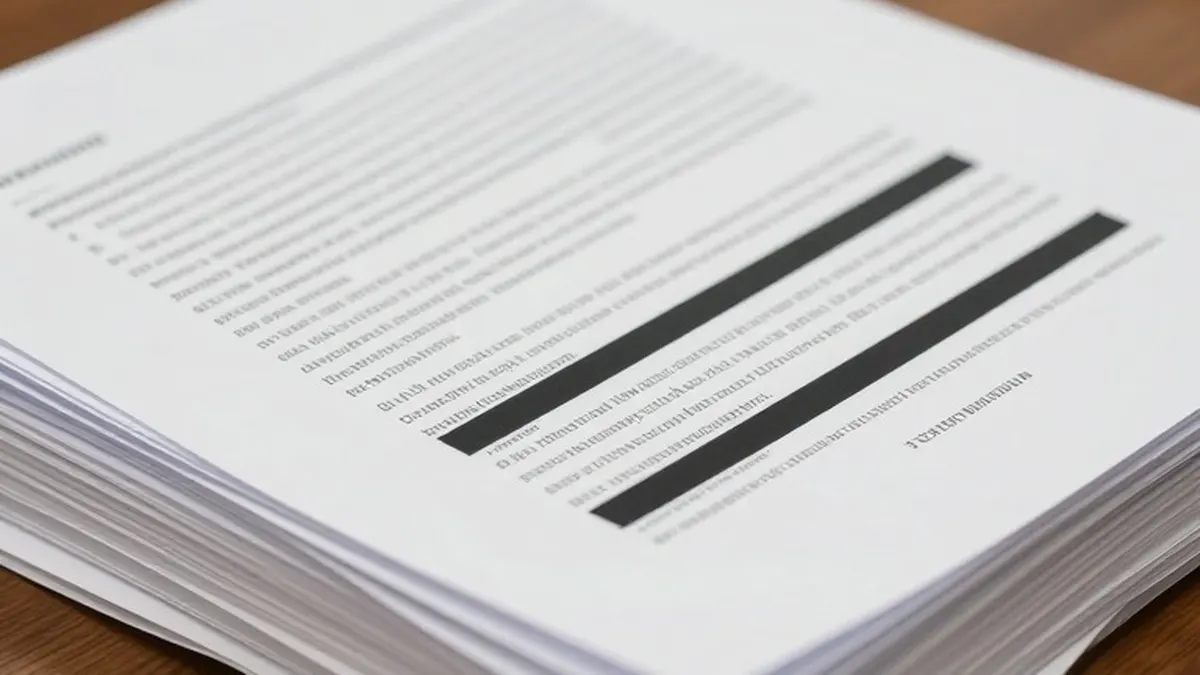
A federal court released a set of heavily redacted records on Monday regarding the search of Rep. Ilhan Omar’s residence in Washington, D.C. The disclosure occurred after federal prosecutors made a final effort to keep the files sealed. The documents provide limited insight into the scope of an ongoing federal investigation that has been active since late October.
The investigation, which prosecutors have characterized as a preindictment inquiry, covers a period extending back to 1980. Federal authorities are reportedly examining whether Omar, a native of Somalia, or her relatives submitted false information on immigration documents. Although the nearly 170 pages of released records do not specify the exact offenses under review, one filing stated that the government believes Omar committed crimes over several decades, beginning before her tenure in Congress.
Omar, who is 44 years old, immigrated to the United States from Somalia in 1995 and became a naturalized citizen in 2000. She has denied the allegations and has not yet been charged with a crime. The release of these documents follows a legal battle involving a coalition of 14 news organizations, including The Associated Press, CNN, and The Washington Post, which petitioned the court for access to the files.
Prosecutors initially opposed the release, arguing that making the records public could jeopardize the investigation while authorities review the seized materials and decide whether to bring charges. Chief U.S. District Judge James Boasberg agreed with the Justice Department that the majority of the records, including a 67-page affidavit that outlined the basis for the search, should remain sealed.
However, Judge Boasberg ordered the disclosure of portions of the records that did not identify witnesses or reveal potential criminal charges. This decision allowed the public to see details regarding a procedural dispute between prosecutors and U.S. Magistrate Judge Matthew Sharbaugh. The conflict centered on the methods federal agents would use to ensure the search did not violate the Constitution’s Speech or Debate Clause, which shields members of Congress from external scrutiny of their legislative work.
In a brief filed on October 7, prosecutors contended that the investigation had no overlap with the member’s congressional duties. They maintained that investigators were not seeking materials protected by legislative privilege. Sharbaugh authorized the search on October 9, three days before agents from Homeland Security Investigations conducted the raid on Omar’s residence.
During the search, federal agents seized Omar’s phone along with other materials from the home. The unsealed records highlight the complex legal considerations involved in searching a sitting member of Congress. The case remains ongoing as the Justice Department continues to review the evidence gathered during the October 12 raid.
The partial release of documents marks a significant moment in the case, offering transparency into the investigative process while still protecting sensitive details. Legal experts note that the balance between public interest and the need for a fair investigation is a central tension in this matter. The next steps in the case will depend on the findings from the materials seized during the search.
As the investigation proceeds, both the defense and the prosecution will likely continue to engage in procedural motions. The outcome of this case could have implications for future searches involving members of Congress. For now, the focus remains on the evidence collected and the legal standards applied to protect legislative privileges.
The unsealed records serve as a snapshot of the early stages of the investigation. While many details remain redacted, the available information underscores the thoroughness of the federal inquiry and the legal hurdles involved in balancing executive power with legislative independence.
Originally published by News Media House
More News · National news · Report a business · Got a Story?