10 documented failures: Rare equipment incident injures no one in St. Louis
A master stream assembly detached from a 2009 Smeal aerial ladder during a church fire, prompting a multi-month investigation into whether bolts sheared or loosened.
By Zainab Patel ·
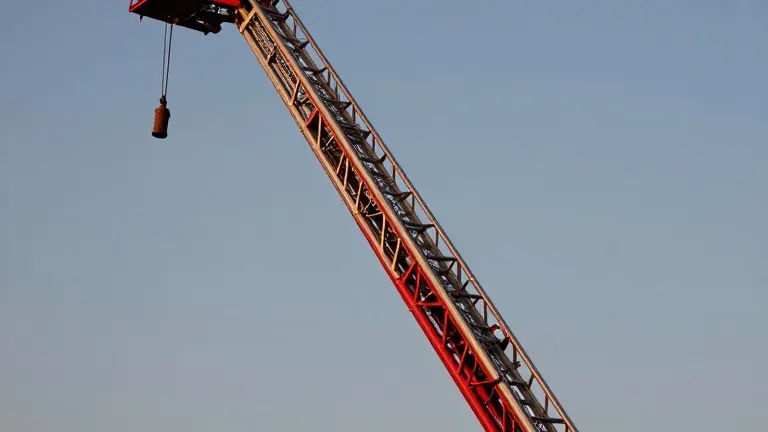
Ten documented occurrences of aerial waterway equipment breaking off fire trucks have been recorded in the United States, a report noted following a 2008 fatality. The National Institute for Occupational Safety and Health issued a safety advisory in that year to address the rare but dangerous failure mode. Saturday night, that specific type of malfunction occurred in St. Louis, leaving a firefighter hanging from his harness as the nozzle and pipe assembly fell from the truck.
The incident took place at a vacant church on Kingshighway and Terry in North City. Fire Chief Dennis Jenkerson stated that Hook and Ladder 6, assigned to the 6th District, arrived early to the second-alarm fire. As the blaze grew in intensity, the on-scene commander requested an aerial waterway. The crew operated a reserve unit, a 2009 Smeal aerial ladder, which had recently passed a third-party inspection. They raised the ladder, positioned the jacks, and connected the water supply.
The firefighter at the top of the ladder began to flow water when he observed the truck assembly moving away from the right side. He immediately called for a shutdown. Once the water flow stopped, the remaining assembly, including the master stream nozzle, fell away from the truck. Jenkerson confirmed that no one was injured during the event. The firefighter was clipped into a safety harness, a standard piece of equipment for crews working at heights of up to 125 feet.
Jenkerson described the moment of failure as a catastrophic event that concerns all firefighters. He agreed with the department's staff that a thorough investigation was necessary to determine the exact cause. The department's shop and the deputy chief in charge of equipment took photographs at the scene. A third-party investigator is now examining the truck to analyze the failure.
Initial findings indicate that the ladder itself showed no rust or broken components in the affected area. The truck assembly that holds the aerial waterway separated from the ladder. Investigators are currently determining whether the bolts that secured the assembly sheared under load or if they had become loose. Jenkerson noted that many questions regarding the operational setup and equipment condition remain unanswered.
The investigation is expected to take between one and two months. During this period, the department is inspecting all of its 125-foot aerial ladders. Crews are checking the specific assembly and bolts on every unit to ensure structural integrity. Jenkerson stated that no issues have been found in the other trucks so far. The failed truck is currently out of service, and the department has another reserve unit available for deployment.
Aerial ladders are critical for fighting fires in St. Louis's high-rise and multi-story buildings. Elevated streams provide the necessary cooling capacity for large structures like the church involved in Saturday's fire. The department tests its equipment according to NFPA standards, including X-rays to detect cracks and rusting. Every aerial ladder undergoes a mandatory third-party inspection every five years, covering the mainframe, outriggers, and structural integrity.